Matte91
Shohin
Pictures?I have a hybrid elm that is one of a kind.

Pictures?I have a hybrid elm that is one of a kind.

There's a thread. It's basically like a Siberian elm with gigantic leaves.Pictures?




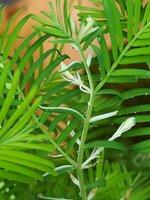




Will you be selling cuttings? I would be interested to get some.Notification brought me back to this thread, so I know I'm reviving a zombie thread, but it is a good topic. Rare is relative. This is a Ficus species, brought into the USA by an orchid collector sometime in the late 1980's. He thought it a waste of space in his greenhouse and gave it to me around 1994. It was collected in the hills around San Cristobal, state of Chiapas, Mexico. I assume Ficus species are not rare in habitat. However, I have not found a match in any botanical description of any neotropical Ficus species. As a result I have distributed cuttings labelled as Ficus from Chiapas. To my frustration Jerry Mieslick started calling it 'Mexicali' which obscures its origin. His specimen of 'Mexicali' came from me, a decade ago or more, we regularly discussed finding a name or a taxonomist to describe it.
It resembles the "nomen nudem" sold in the hobby as a willow leaf Ficus with several significant differences. It has this shredding reddish bark that the willow leaf Ficus does not have. The leaves on the average are wider than willow leaf, though not longer. It forms aerial roots easily even in somewhat lower humidity and lower temperatures. It is also deciduous, in that regardless of watering, it tends to be leafless January, February and part of March. It can tolerate total drought during this period. Alas, another difference, nobody I know has been able to get it to produce synconia (fruit). the willow leaf Ficus sold by Wigert's and other Florida vendors does produce fruit regularly when given sun and allowed to grow.
The fruit issue might just be due to my northern climate, but Jerry Meislick could not get fruit either. We need fruit to give a taxonomist the key traits needed for either identifying it to species or writing a species description if indeed it is new to science as I suspect it is.
Ficus from Chiapas makes cuttings easily, I plan to do a batch this summer. It might be a common but unappreciated "weed" in Chiapas, but to the best of my knowledge, all individuals of this species in USA trace back to this plant.
View attachment 622792
View attachment 622791

Notification brought me back to this thread, so I know I'm reviving a zombie thread, but it is a good topic.

Leo, I would be very interested in a cutting of 'Chiapas 'if possible. The tree in your photo has exactly the strangler fig look that I have unsuccessfully tried to achieve with various varieties of F. microcarpa.
Will you be selling cuttings? I would be interested to get some.


AbsolutelyIf I have a successful batch of cuttings, I will be selling them, at a modest price. The caveat is I want all recipients to agree to be careful with correct naming. I want no "new names" made up for this species unless it is a formal botanical description published in a botanical journal. No new names like 'Mexicali', it needs to remain 'Ficus species from San Cristobal, Chiapas, Mexico', or 'Chiapas' for short. We must make an effort to preserve provenance until it is understood what this specimen represents.
Right now it is getting ready to go dormant, I won't try to root cuttings now. We will see what success I have in spring. I will post on BNut first when I have a batch of cuttings rooted and ready to send out. They will be cuttings, hence small, but they are rare material, and this thing grows FAST when sun, heat and humidity happen at the same time.
It doesn't need super high humidity, but anything over 40% visibly improves growth and aerial root development.
if you ever happen to cross the big pond and are able to bring a stem with some leaves in, let me know.If I have a successful batch of cuttings, I will be selling them, at a modest price. The caveat is I want all recipients to agree to be careful with correct naming. I want no "new names" made up for this species unless it is a formal botanical description published in a botanical journal. No new names like 'Mexicali', it needs to remain 'Ficus species from San Cristobal, Chiapas, Mexico', or 'Chiapas' for short. We must make an effort to preserve provenance until it is understood what this specimen represents.
Right now it is getting ready to go dormant, I won't try to root cuttings now. We will see what success I have in spring. I will post on BNut first when I have a batch of cuttings rooted and ready to send out. They will be cuttings, hence small, but they are rare material, and this thing grows FAST when sun, heat and humidity happen at the same time.
It doesn't need super high humidity, but anything over 40% visibly improves growth and aerial root development.

Agreed! I hate multiple names for genetically identical plants! Maybe we could start a Chiapas discussion for those of us who receive cuttings.The caveat is I want all recipients to agree to be careful with correct naming.
Yes I'd be interested in buying some when ready. Of course it's important to keep provence. Every cutting, tree and pot I buy from anyone gets a metal label plus documented with pictures and written up in my notebook.If I have a successful batch of cuttings, I will be selling them, at a modest price. The caveat is I want all recipients to agree to be careful with correct naming. I want no "new names" made up for this species unless it is a formal botanical description published in a botanical journal. No new names like 'Mexicali', it needs to remain 'Ficus species from San Cristobal, Chiapas, Mexico', or 'Chiapas' for short. We must make an effort to preserve provenance until it is understood what this specimen represents.


